I am in my third, and final, studio. I love seeing where people create their art, so I’ve included photos and descriptions of all three of them. Each of these spaces has taught me something about what is important and what I can live without.
VisArts
2007-2008
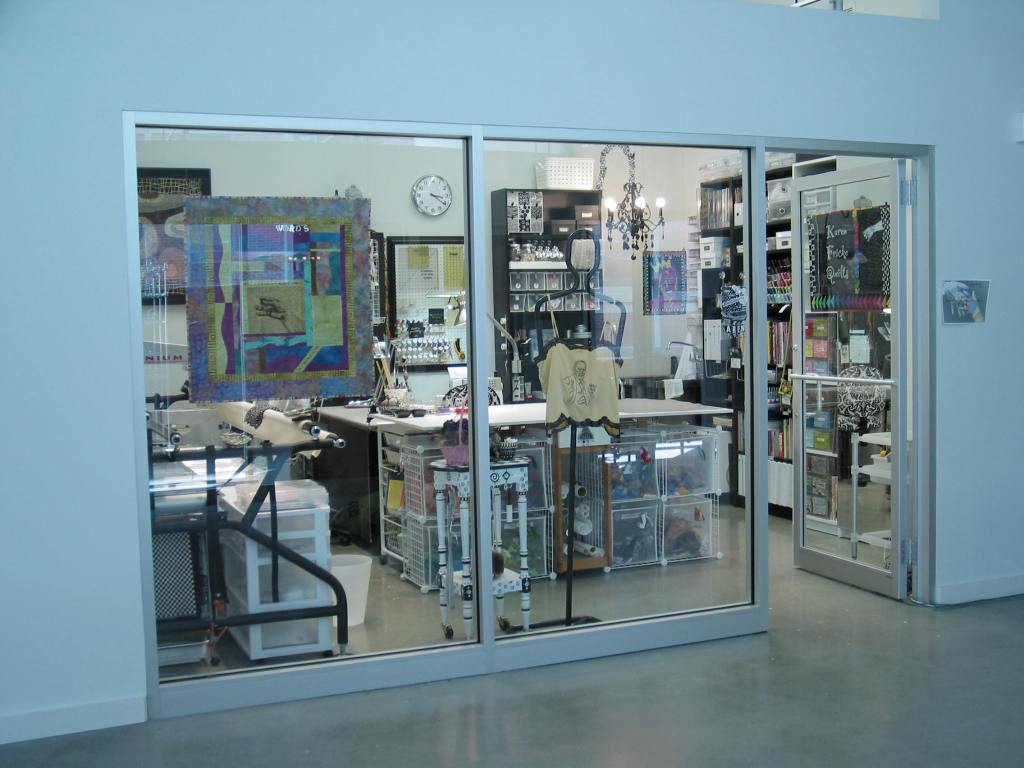
I spent almost a year as a resident studio artist at VisArts, the community art center in Rockville, Maryland. I wrote about my studio space there in Cloth, Paper, Scissors special issue, Studios, in 2008.
Scroll through these photos of my VisArts studio:



Garage
2009-2022
My VisArts studio was fun, but I missed my house, and I missed my family, and I realized something important about myself. I am a homebody, through and through. And while I really enjoyed the camaraderie of working in the proximity of so many talented artists, I missed being at home. So I decided to move back. I wrote about that decision in the July/August 2009 issue of Cloth, Paper, Scissors magazine.
Scroll through these photos of my garage studio:

My garage studio was already drywalled and insulated, so I had only to install an in-wall air conditioner/heater, as well as add garage flooring so I wouldn’t have to stand on cold concrete.

Lots of Ikea shelving and tables provide tons of storage. The stacks of plastic totes carry handouts and supplies for classes I teach.
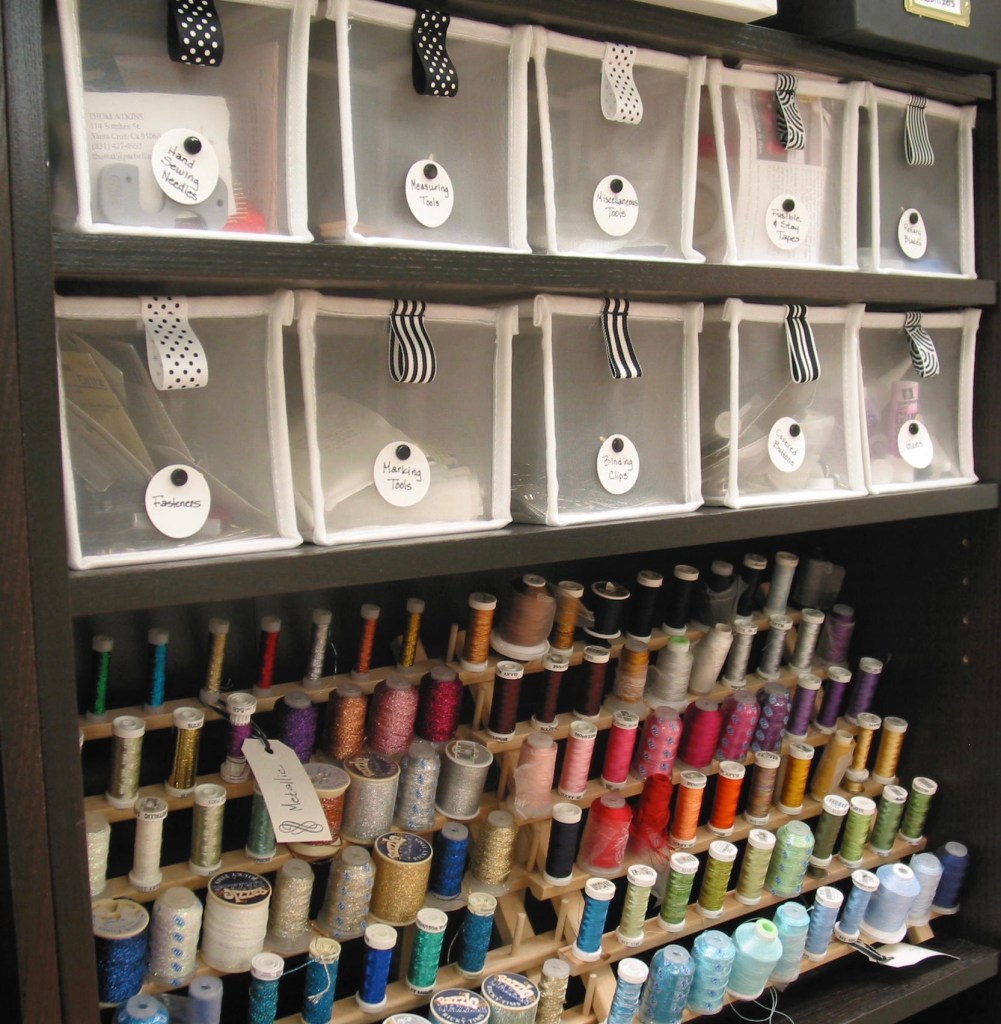
Storage bins for notions and thread.

Thread…
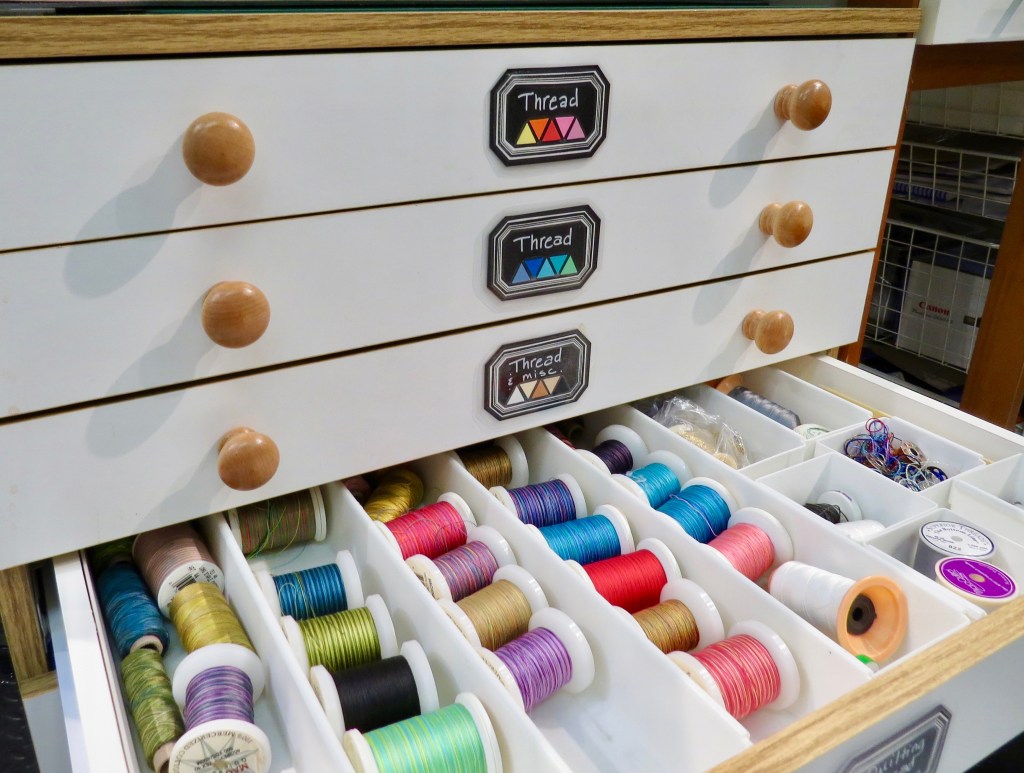
…and more thread…

…and even more thread!

Garment fabric is stored under the table.
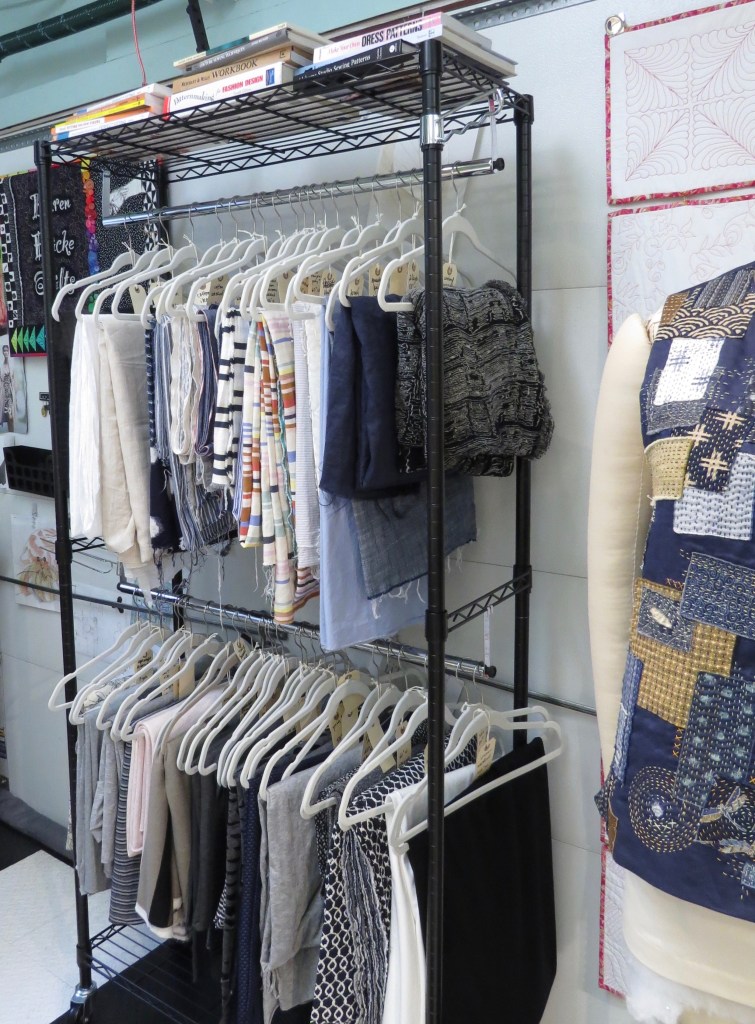
And on a rolling coat rack.

Every studio needs a chandelier! The drops are black crystals I snagged on eBay, but also old spools of thread from my grandmother’s sewing room that I painted.
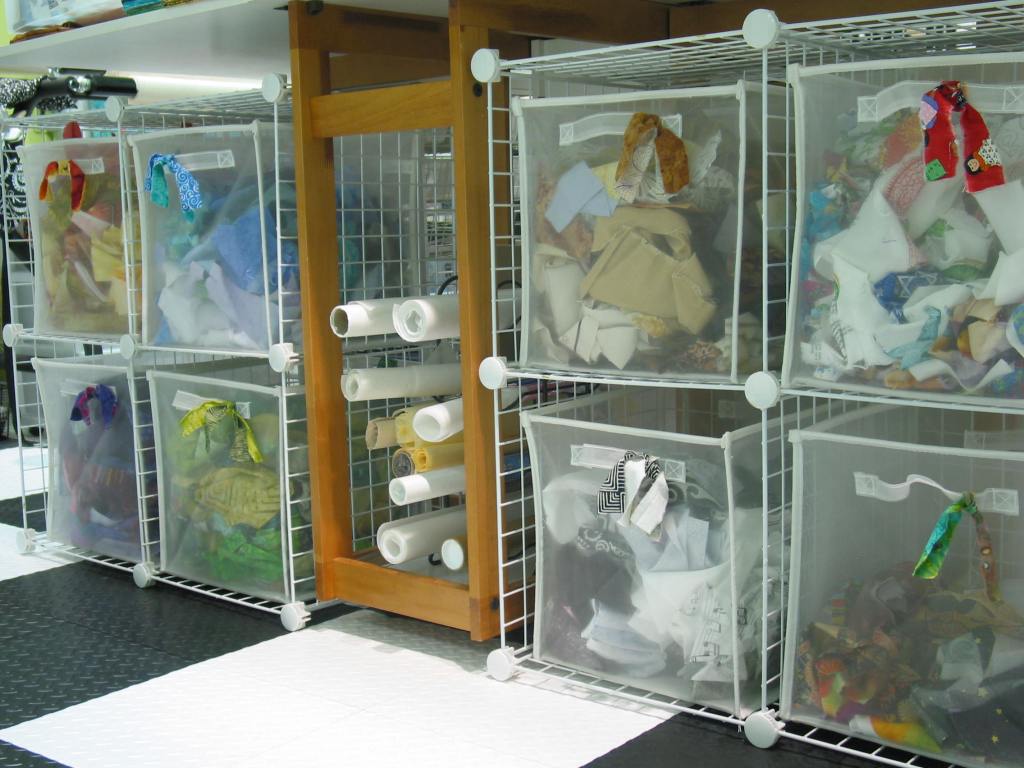
Scraps of fabric are in color-sorted bins. Paper fusibles and stabilizers are kept on a wine rack. (There’s another rack in the fridge for my rosé!)
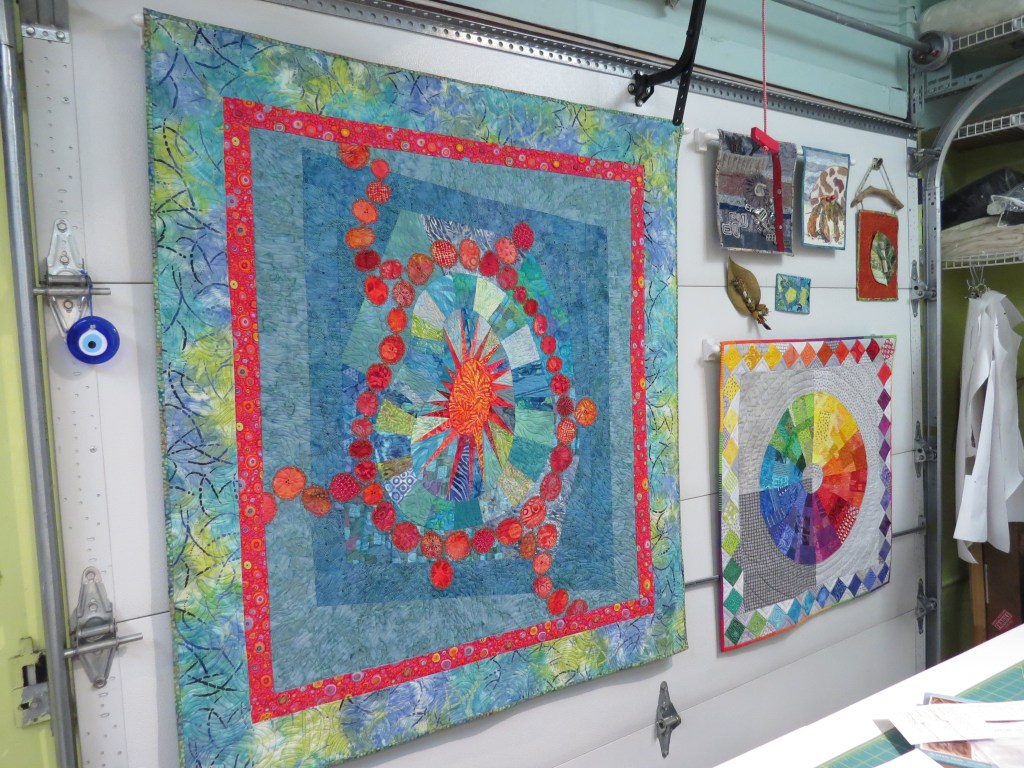
I use the metal garage doors as display space, hanging quilts from magnetic curtain rods.
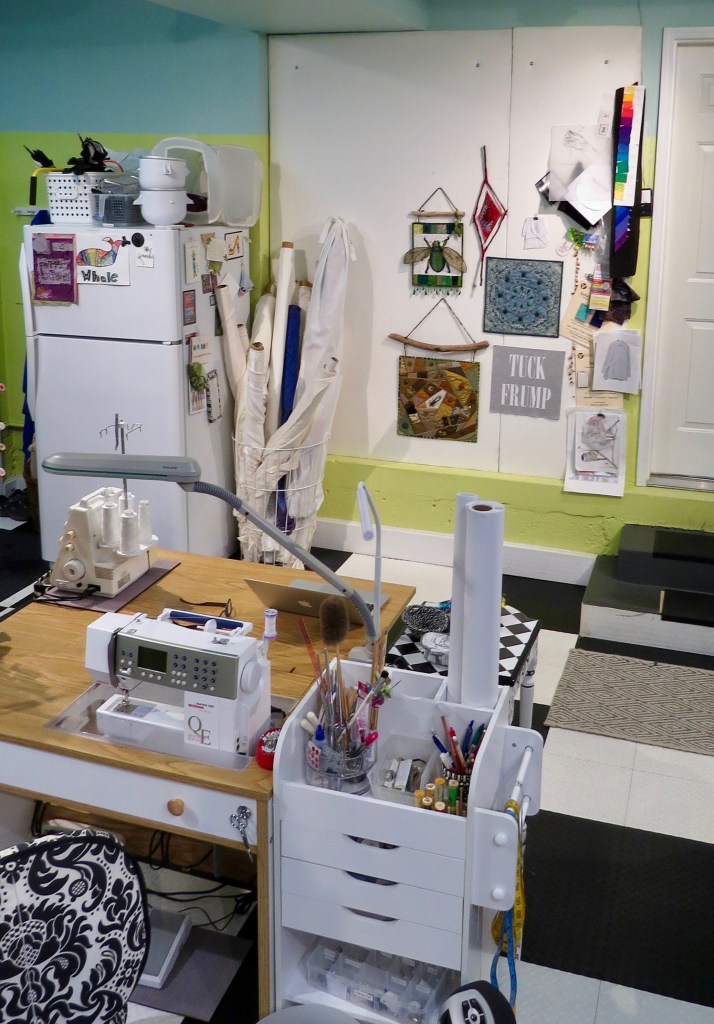
My design wall functions as a bulletin board when not in use, and bolts of silk and cotton fabric for dyeing are corralled in a bin.

A jewelry cabinet holds lots of odds and ends. I painted the drawer fronts with chalkboard paint so when I switch contents, I can easily re-label them.
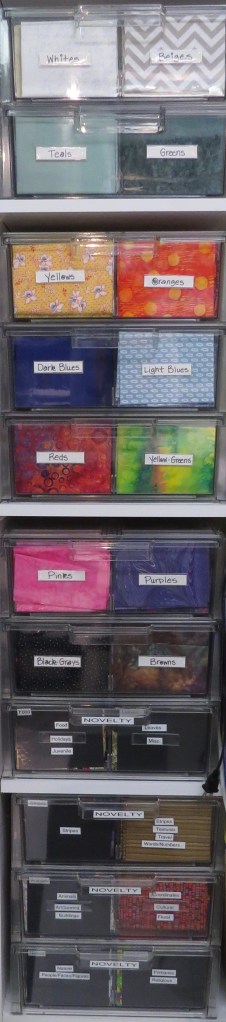
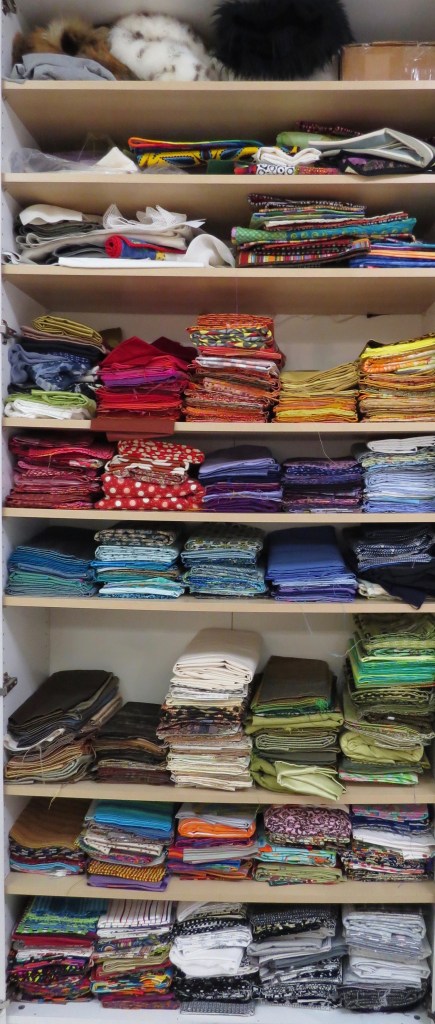
Yardage is stored in a cabinet, sorted by color and fiber content. Smaller cuts like fat quarters are filed in plastic drawers, organized by color. Novelty prints are sorted by theme.
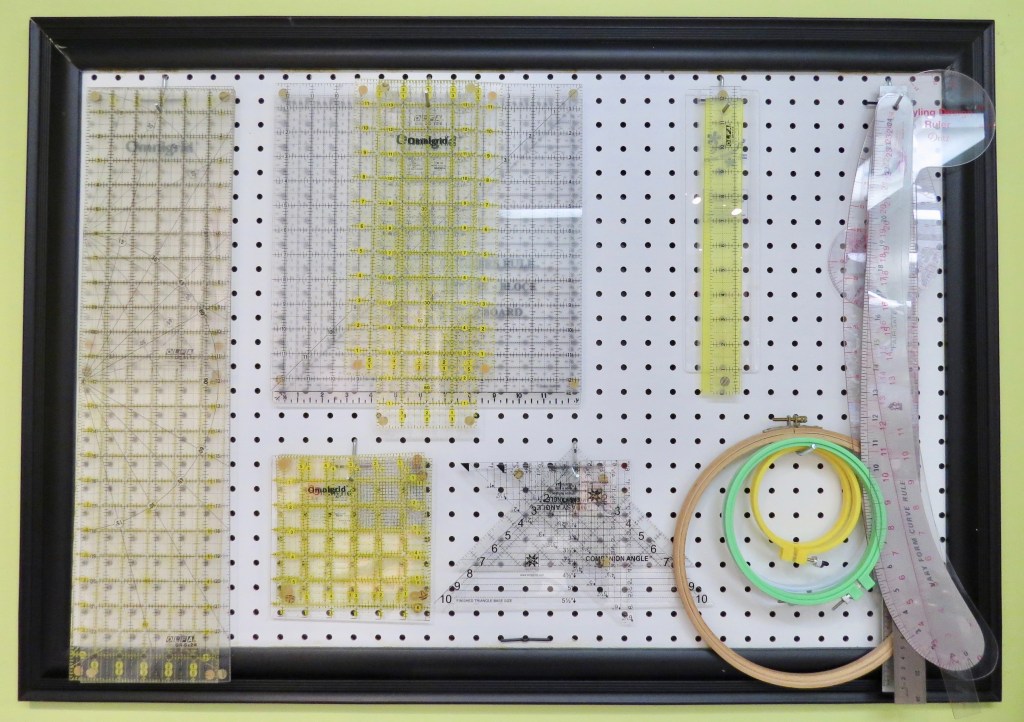
Rulers and embroidery hoops hang on a framed pegboard.
New Jersey
In 2022, we decided to move to northern New Jersey to be closer to our children and grandchildren. We found a fixer-upper in North Caldwell, and spent a year and a half living behind a plastic sheet, while contractors s l o o o o o w l y turned our house into a grandparents’ paradise. The only space for a studio was the dark, wood-paneled basement rec-room, about half the square footage of my garage. Yikes. I purged more than half of my stash, giving it all away to sewing and crafting friends.
I worked with a great company, Innovative Closet Design, to plan shelving, drawers, and cupboards to house what was deemed worth making the move. We ripped up the brown shag carpet, added lots of additional lighting and electrical outlets, and replaced the broken, stained ceiling panels.
The new space is a bit tighter, but feels much more streamlined because I am able to hide so much behind drawer fronts and cupboard doors. I’m really loving my new space!

White cabinetry, light vinyl plank flooring, and more lights than the electrician said I could possibly need (he was wrong!) make my basement studio feel organized and bright.
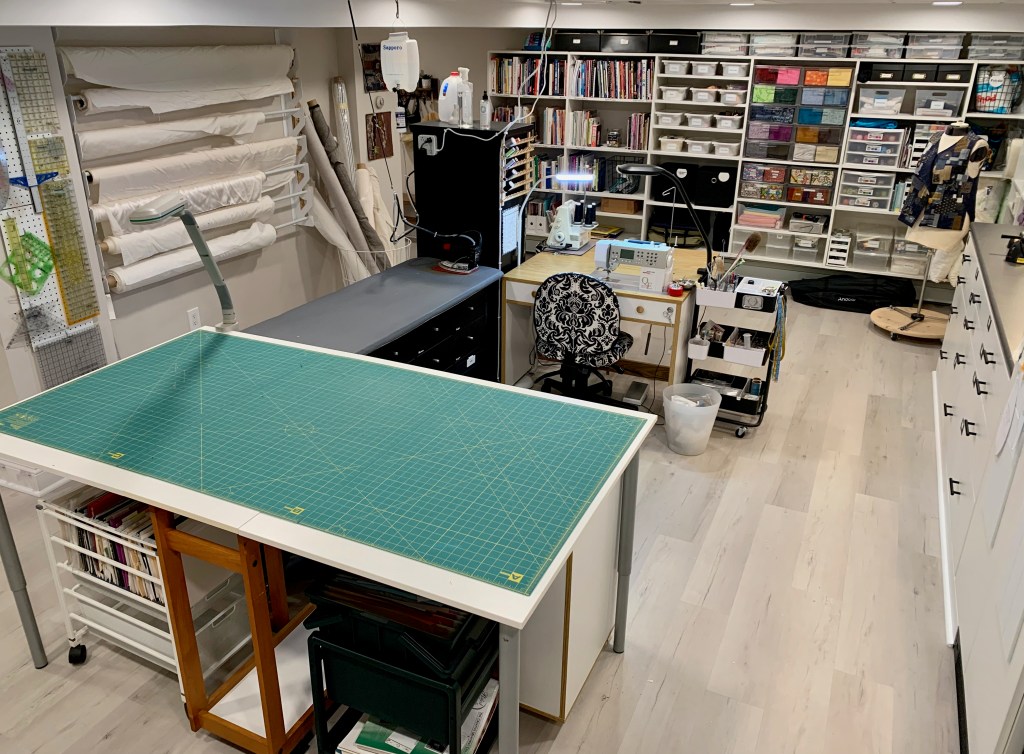
I kept the U-shaped formation of cutting, pressing, and sewing tables, which has always worked well for me.

My favorite yard sale find, a jewelry armoire, definitely made the move. The chalkboard paint on the front of the drawers allows me to switch things around.
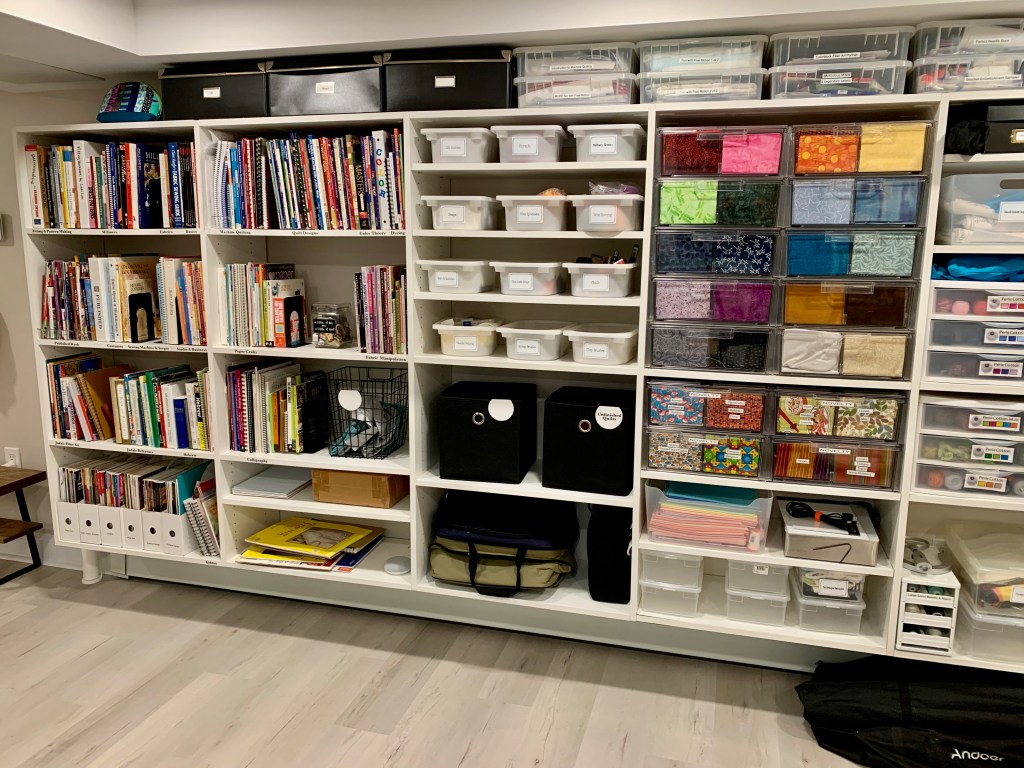
Every inch is packed, but seeing things neat, organized, and labeled like this makes my heart sing. My most favorite new gadget: Cricut Joy cutting and labeling machine. Easier to use than the original machine (which didn’t make the move.)

I keep my fat quarters in plastic sock drawers from The Container Store. Each plastic case on top of the shelves holds things I need to teach a particular class.


My design wall is tucked behind my rolling garment fabric storage, easy to push out of the way when I need access to it. I made the wall to fit the odd shaped space using insulation foam board panels from the hardware store, covered in batting and extra-wide flannel. If I had to do it again, (which I never will…) I would have covered the labeling, as you can see it through the fabrics. Oh well.

My favorite part of the studio is the wall of drawers and cupboards. The counter top is great additional design space when I need it.


Deep lower drawers are great for storing bulky items, like cording, zips, trims, and lace.
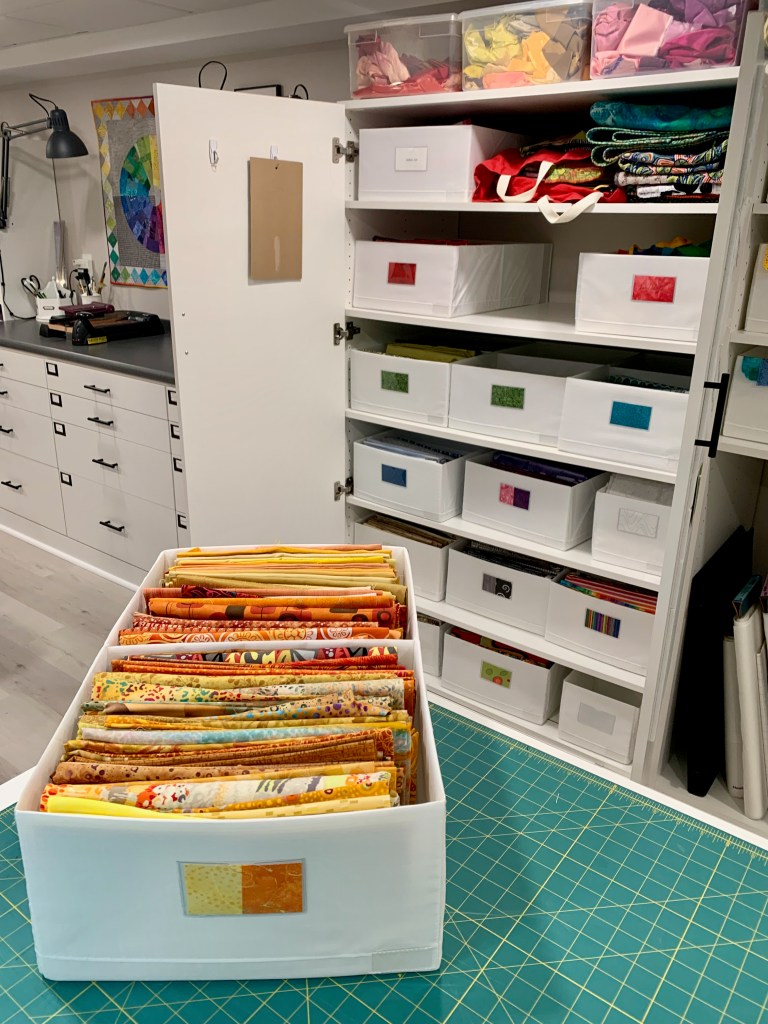
My fabric yardage is still sorted by color, then by fiber (cotton in front, silk in back), but I’ve corralled them in these light STUK storage boxes from Ikea. Silk scraps are in clear bins on top of the cupboards; cotton scraps are in additional STUK boxes.

I upgraded my pressing station by placing my Big Board on top of the KALLAX shelving unit from Ikea. Hanging fabric racks and a pegboard for rulers keeps things accessible. My new laundry room is just on the other side of the basement, so I still have access to a sink and washer and dryer, for dyeing projects.

I found this great rolling cart with accessories at The Container Store to house all my sewing machine supplies. Thanks for visiting my happy place!

 Karen Fricke Quilts